Voz
2026
A voice-directed live music arrangement system. Voice goes in; what you said and how you said it controls a live TidalCycles session synced to Ableton.
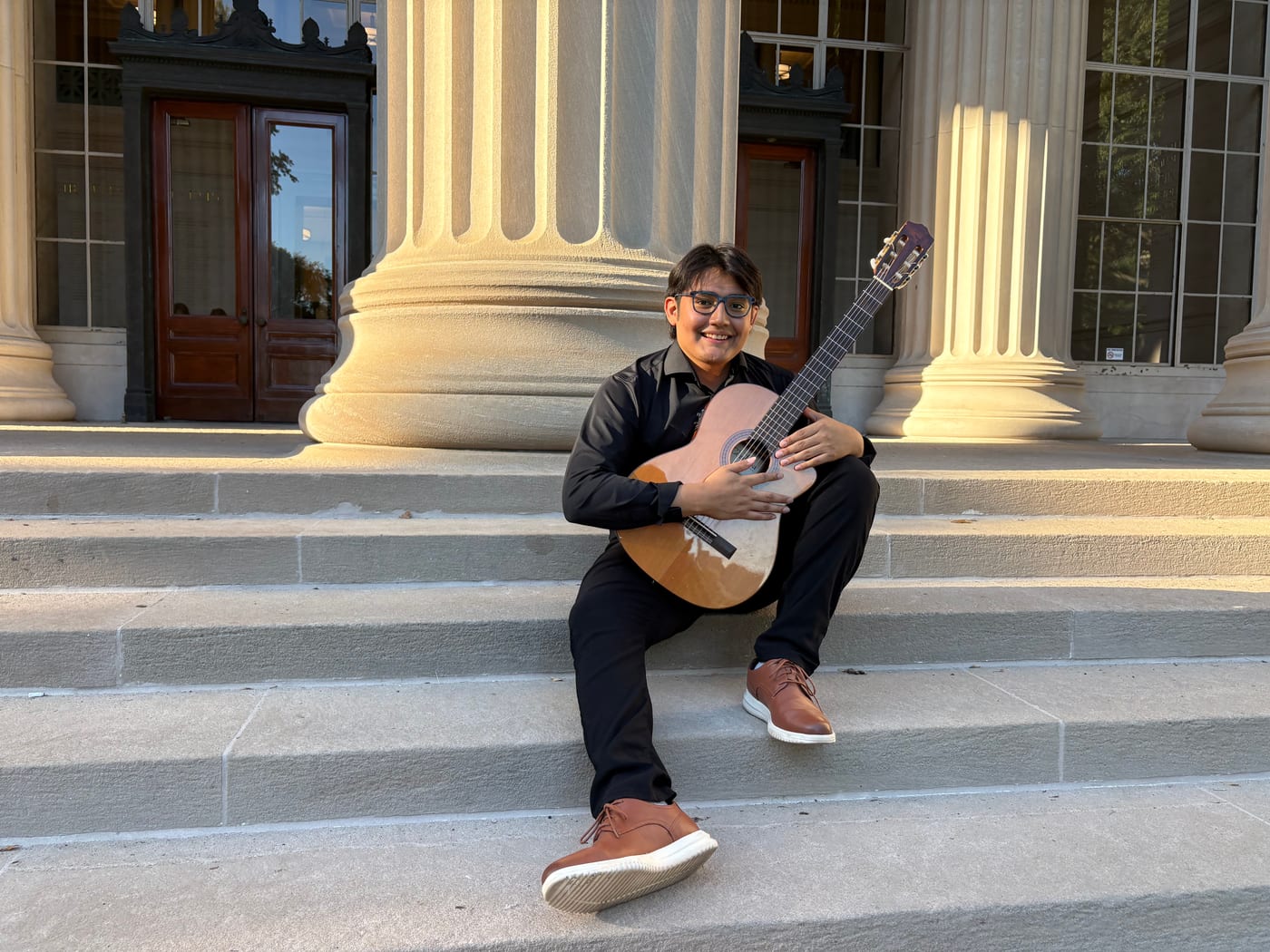
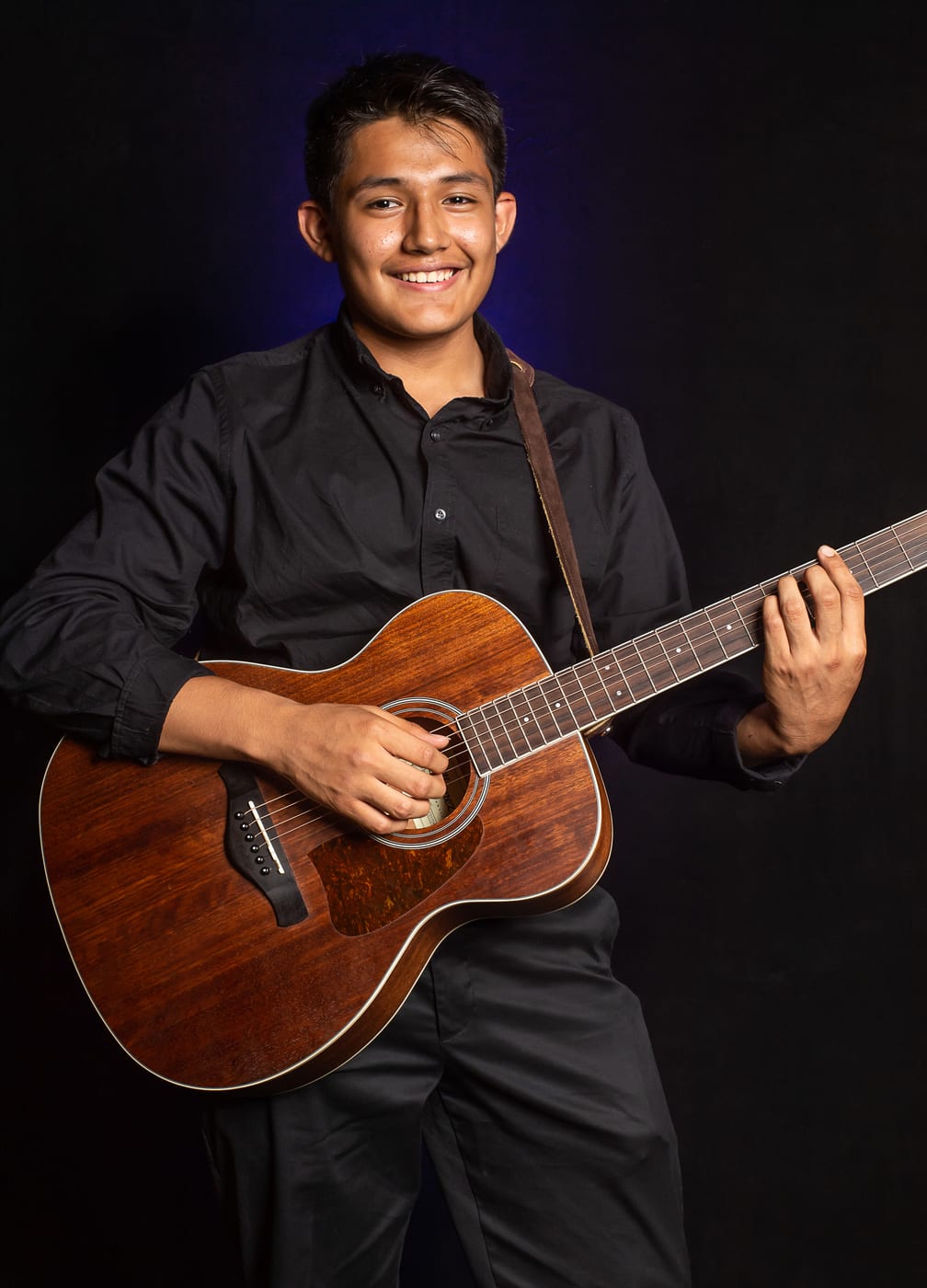
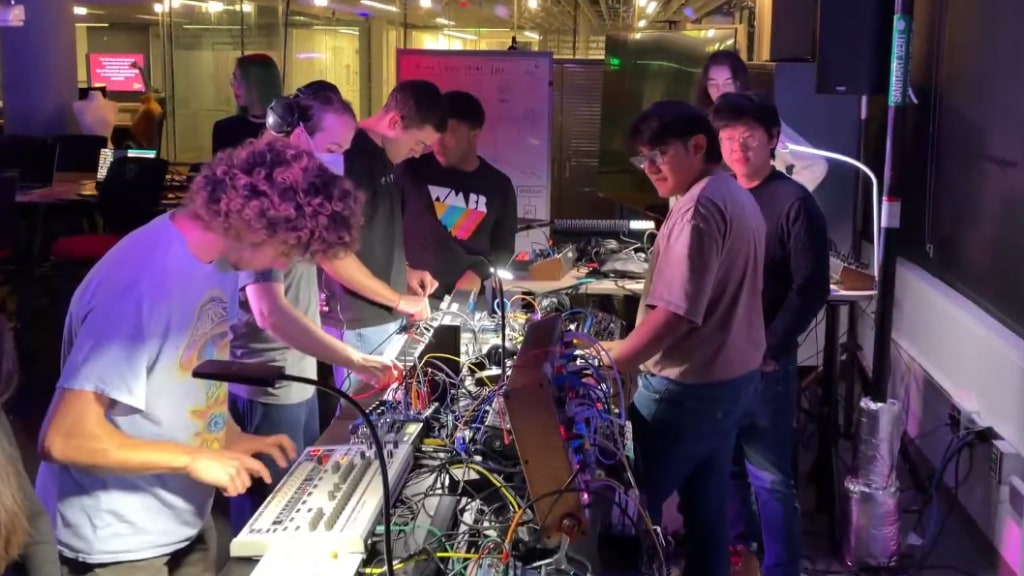
Hi, I'm Yahir Hernandez – from Chicago, IL. I just finished a double major in Computer Science & Engineering and Music at MIT, and I'm heading into MIT's M.S. in Music Technology and Computation this fall, co-advised by Paris Smaragdis (Adobe) and Anna Huang (Google), with Shih-Lun Wu as my research mentor. I specialize in building systems for creative musical experiences through software design, signal processing, machine learning, and music. Across projects, my focus is on making musical intelligence reliable, controllable, and usable in practical tools. This summer, I'm an Engineering Intern at Hiya in Seattle working on voice AI.
Feel free to check out my resume here.
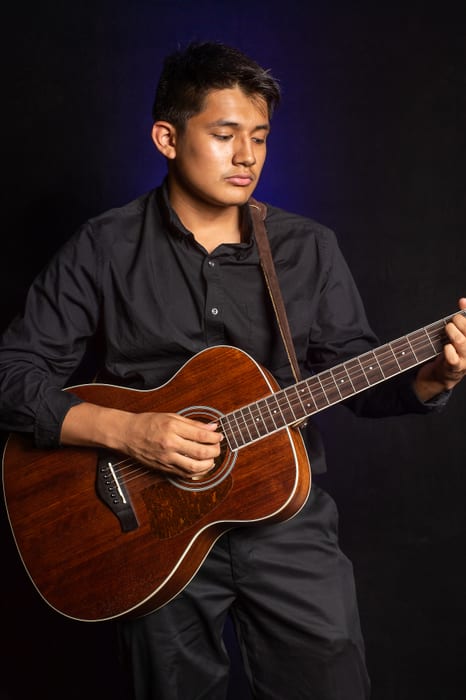
Always down to talk about music, tech, or whatever's sitting at the intersection! Feel free to reach out.
Imagine a sandbox. You can do absolutely anything you want by building objects of your own design; the possibilities are endless. That's computer science — a place where you can create games, algorithms, and interactive experiences of your own. You are the artist, your code is the paint, and you can paint any piece you dream of. My early programming days began by building a Galaga replica using Java fundamentals from my first programming class. This sparked the beginning of my journey and passion in computer science.
Growing up in Chicago as the son of Mexican immigrants, I felt caught between American culture and my family's heritage. My parents raised me speaking Spanish, but I spoke English everywhere else. Over time, I lost my fluency in Spanish, and with it, any connection to my culture seemed to dwindle — that was until music saved me! The first time I heard Hotel California, I fell in love with the guitar solo and knew I had to play it myself. I joined a Latin music program, saved up for an acoustic guitar, and started learning. In learning Latin music history and sharing that with my parents, I discovered something powerful: my mother had played guitar for her church in Mexico. Through studying Latin music, I reconnected with my heritage, reabsorbed Spanish, and finally understood my family's stories. Music became the bridge between cultures, the key that helped me discover who I truly am. Since then, music has and will always continue to be a key part of my identity.
I never imagined building a career around music until I took my first music course at MIT. What started as fulfilling an arts requirement became a revelation — I fell in love with music all over again, this time with technical tools to build something meaningful. Despite the fatigue that comes with MIT, my music classes left me feeling fulfilled and driven. That's when I discovered music tech: the intersection where I could combine my strengths in STEM with my passion for music. Learning from incredible professors like Eran Egozy, Ian Hattwick, Paris Smaragdis, and Pascal Le Boeuf only deepened this love. My dream is to develop generative music models that serve as creative tools to inspire musicians and open the door to music-making for people of any ability. My only regret is not diving into this sooner.
Tap any card to expand • Click images to view full screen
A voice-directed live music arrangement system. Voice goes in; what you said and how you said it controls a live TidalCycles session synced to Ableton.

Gaze-as-attention for audio event localization in human–robot teaming. Submitted to ICRA.
Production ML for beat-aligned drop detection in electronic music. Custom beatgrid + tempo algorithm avoiding dependencies on Rekordbox or Serato.
Fine-tuned Stable Audio Open 1.0 on a handcrafted dataset of 500+ corrido instrumentals to address cultural representation gaps in generative music models.
Continue the journey of my projects — tap Show More to show the rest.
What's on rotation right now